
How to Return to Training After Rehabilitation
Finishing your rehabilitation exercises is an important milestone, but it does not always mean you are ready to return immediately to your previous training routine.
Returning to training after rehabilitation is a gradual process. Your body needs to rebuild the strength, movement capacity, load tolerance and endurance required for the activities you want to resume. This may mean progressing from controlled rehabilitation exercises into normal gym training, running, recreational exercise or sport.
The right progression depends on your injury, current physical capacity and the demands of your activity. A structured rehabilitation plan can help bridge the gap between feeling better in everyday life and being ready for more demanding physical activity.
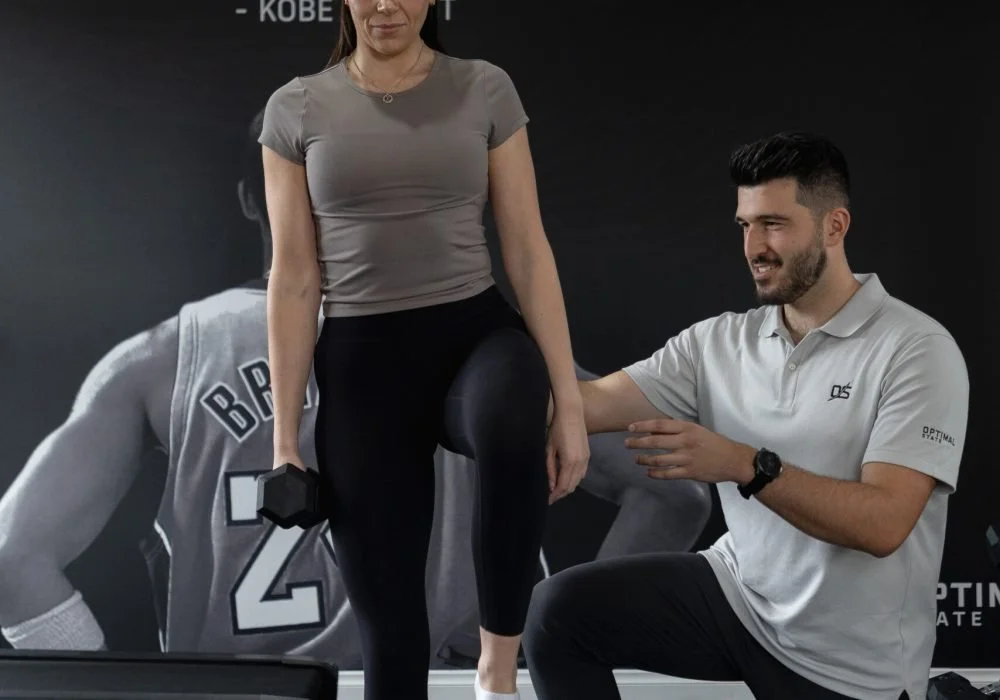
When Are You Ready to Return to Training After Rehabilitation?
Being pain-free during everyday activities does not necessarily mean you are ready for unrestricted training.
Training can place much greater demands on your body through:
Higher resistance
More repetitions and sets
Longer sessions
Greater training frequency
Faster movements
Repeated loading
Jumping, running or changes of direction
Sport-specific movements
For example, someone recovering from a lower back problem may be comfortable walking and completing basic exercises but still lack the strength and tolerance required for repeated lifting at the gym or physically demanding work.
Likewise, someone recovering from a neck or shoulder injury may have good everyday function but still need to progressively rebuild strength before returning to heavier upper-body training.
A return-to-training assessment can help identify the difference between what you can do now and what your normal activities require.
For people recovering from an injury in Burnside Heights and surrounding western Melbourne areas, this type of assessment can provide a clearer starting point for the next stage of rehabilitation.
How Is Rehabilitation Different From Normal Training?
Rehabilitation exercises are generally selected to address specific limitations following an injury or period of reduced activity. Depending on the individual, rehabilitation may focus on:
Strength
Mobility
Balance
Movement control
Coordination
Load tolerance
Functional capacity
Training has a broader purpose. Instead of simply restoring a particular movement or physical quality, it needs to prepare your body for the demands of your chosen activity.
A person returning to general gym training may need to rebuild resistance and volume. A runner may need to gradually increase running duration and speed. Someone returning to a physical job may need to tolerate repeated lifting, carrying, bending or prolonged activity.
An integrated rehabilitation program can help connect these stages by progressing from specific rehabilitation exercises towards the functional demands of work, exercise or sport.
What Should You Be Able to Do Before Returning to Training?
Before increasing training intensity, it is useful to establish a reasonable foundation of movement quality, strength and tolerance.
1. Movement quality
You should be able to perform movements relevant to your activity with appropriate control. Depending on your goals, these may include:
Squatting
Lunging
Bending
Pushing
Pulling
Rotating
Jumping
Landing
If your movement quality deteriorates significantly as an exercise becomes harder or you become fatigued, the workload may need to be adjusted.
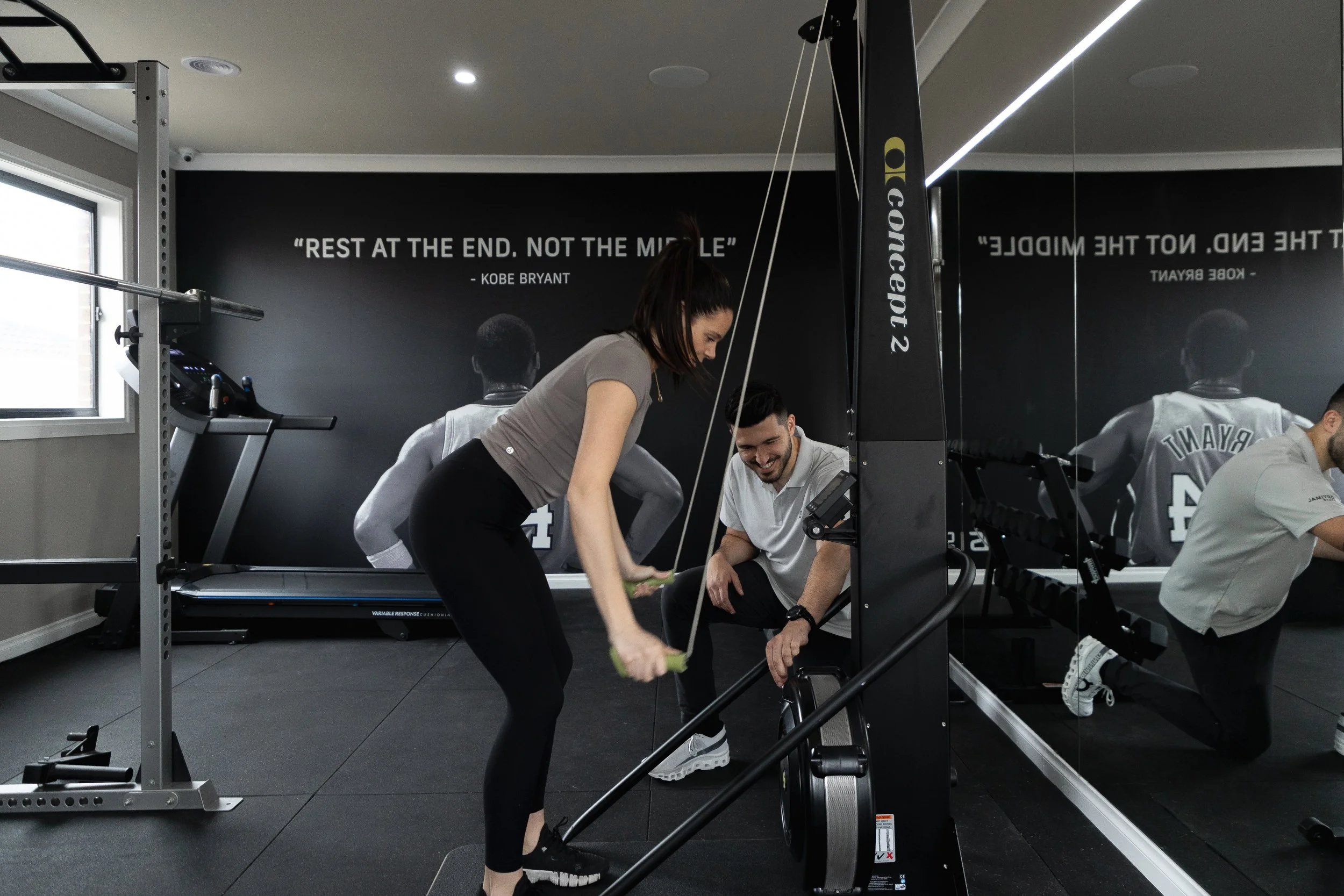
2. Strength
Your strength needs to match the demands of the activity you want to return to. The strength required to walk comfortably is very different from what is required to lift heavy weights, play competitive sport or perform physically demanding work.
This is particularly relevant for people recovering from lower back problems, including sciatica or a disc bulge, where returning to heavier lifting may require more gradual progression than simply returning to normal daily activity.
3. Load tolerance
Your body also needs to tolerate repeated loading. Being able to complete one exercise comfortably does not necessarily mean you can handle a full training session or repeat that workload several times during the week.
Building this capacity is an important part of rehabilitation and return-to-training planning.
How Should You Progress Your Training After Rehabilitation?
A useful progression generally involves gradually increasing the demands placed on your body rather than changing everything at once.
1. Gradually increase resistance
Once basic movement and strength have improved, resistance can be increased progressively.
This may involve progressing from:
Bodyweight → resistance bands → machines → free weights → more demanding exercise variations
The appropriate progression depends on your injury and goals.
For example, someone returning to training after a lower-limb injury may gradually increase resistance during squats or step exercises. Someone recovering from a shoulder problem may progressively increase resistance during pressing, pulling or overhead movements.
The goal is to provide enough stimulus to build capacity without repeatedly exceeding what your body can currently tolerate.
2. Increase volume and repetitions
Strength is only one part of returning to training. You also need to rebuild your ability to perform movements repeatedly.
Instead of immediately returning to your previous number of sets, repetitions or weekly sessions, workload can be increased progressively. This may involve:
Adding repetitions
Adding sets
Increasing session duration
Increasing training frequency
Gradually increasing total workload
For runners, this might mean increasing running duration before introducing faster intervals. For gym training, it may mean rebuilding total training volume before returning to previous weights.
The objective is to develop enough load tolerance to train consistently rather than simply completing one demanding workout.
3. Introduce speed and intensity
Many rehabilitation exercises are performed slowly and under controlled conditions. This can be useful when rebuilding strength and movement control.
Normal training, however, may require rapid force production. Running, jumping, throwing, lifting and changing direction can all involve faster and more demanding movements.
As your capacity improves, your rehabilitation may therefore progress towards:
Faster movements
Higher resistance
Acceleration and deceleration
Jumping and landing
Agility
More demanding conditioning
The progression should reflect the activity you intend to return to.
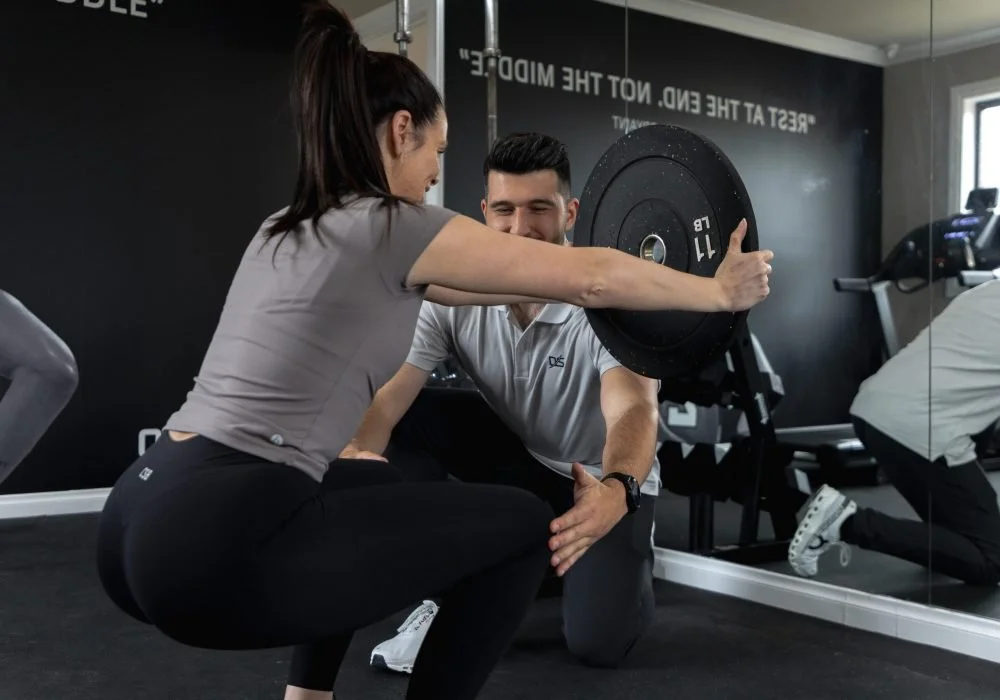
4. Reintroduce complex and sport-specific movements
The later stages of rehabilitation should increasingly resemble the demands of your normal activity.
A football player may need to progressively reintroduce sprinting, kicking, jumping and changes of direction.
A basketball player may need repeated jumping and landing.
A recreational lifter may need to rebuild tolerance for heavier compound movements.
A tennis player may need rotation, lateral movement and repeated changes of direction.
This is where return-to-sport rehabilitation becomes particularly important. The aim is not simply to complete exercises in a controlled environment but to progressively prepare your body for the movements and workloads you will actually encounter.
For a more detailed look at this process, see our guide to what a good return-to-sport rehabilitation program should include.
When Should You Modify Your Training?
You may need to modify your program when your current workload is greater than your present capacity.
Signs that your program may need adjustment include:
Symptoms consistently increasing during or after training
Movement quality deteriorating with fatigue
Strength or endurance not keeping up with training demands
Recovery taking significantly longer than expected
Swelling or instability developing
Reduced function
Modification does not necessarily mean stopping completely. Depending on the situation, it may involve:
Reducing resistance
Lowering training volume
Changing an exercise
Increasing recovery time
Reducing training frequency
Temporarily returning to an earlier rehabilitation stage
If symptoms are significant, worsening or persistent, professional assessment is appropriate.
How Can Integrated Care Help With the Transition?
Returning to training is not always a simple matter of completing a list of exercises. Your rehabilitation may need to address several different factors at the same time, including physical limitations, movement quality, strength and the demands of your normal activities.
This is where integrated allied health care can be useful.
Rather than treating rehabilitation and training as completely separate stages, an integrated approach can connect assessment, hands-on treatment where appropriate, exercise rehabilitation and progressive loading.
You can learn more about how chiropractic, osteopathy and rehabilitation can work together and how different components of care may fit into an individual's rehabilitation plan.
Assessment: An assessment can consider factors such as strength, mobility, movement quality, balance, endurance, functional capacity, and current training demands. The purpose is to understand what you can currently tolerate and identify limitations that may need further attention. If you are attending your first appointment, it can also help to understand what to expect during an allied health assessment.
Identifying physical limitations: You may still have residual weakness, reduced endurance, restricted movement or difficulty with specific activities even after your everyday symptoms have improved. Identifying these limitations provides a more useful basis for deciding what to progress.
Progressive loading: Depending on your goals, this may include resistance training, conditioning, balance exercises, running progressions, strength development, functional movements, and sport-specific exercises. The aim is to gradually match your physical capacity to the demands of your activity.
Return-to-training planning: Instead of simply asking, "Am I ready to train?" a more useful approach is to ask, "What can I do now? What does my normal training require? Or how does my body respond when the workload increases?. This approach can make the transition from rehabilitation to training more structured and measurable. It also supports continuity of care during rehabilitation, particularly when progress needs to be monitored and the program adjusted as your capacity changes.
From Rehabilitation to Full Training
The transition from rehabilitation to full training should be viewed as a gradual continuum rather than a single milestone.
A typical progression may look like this:
Rehabilitation exercises → strength development → increased volume → greater intensity → activity-specific movements → normal training
Not everyone will follow exactly the same sequence. Your progression depends on:
Your injury
Current strength
Movement capacity
Training demands
Work requirements
Previous training level
Response to increasing load
Rehabilitation exercises also do not necessarily need to disappear once you return to training. Some strengthening, mobility or conditioning exercises may remain useful as part of your ongoing program.
The goal is not simply to be comfortable during everyday activities. It is to build enough physical capacity to repeatedly handle the demands of the activities that matter to you.
If you're returning to sport, our guide on how to know when you're ready to return to sport after an injury provides further guidance on the factors that should be considered.
Frequently Asked Questions
-
Yes, but your previous workload may need to be rebuilt gradually. Starting with manageable resistance and volume allows you to assess your tolerance before progressing towards higher intensity and more complex exercises.
-
Returning to exercise can be appropriate when your current physical capacity matches the demands of the activity. A gradual progression allows you to identify whether your strength, movement and load tolerance are sufficient.
-
Not necessarily. Depending on the situation, the exercise, resistance, volume or frequency may be modified. However, significant, worsening or persistent symptoms should be assessed rather than repeatedly pushed through.
-
Professional guidance can be useful if you have had a significant injury, symptoms continue, your training demands are high or you are uncertain whether your current physical capacity is appropriate for your normal activities.
-
An assessment may consider your strength, mobility, movement quality, endurance, functional capacity and the specific demands of your work, exercise or sport. This helps identify what you can currently tolerate and what may need to progress.
-
In many cases, rehabilitation exercises can continue as part of your normal training. Strength, mobility and conditioning work may help maintain the physical qualities developed during rehabilitation.
Rehabilitation and Training Should Work Together
Completing rehabilitation is an important step, but returning to normal activity requires more than simply finishing your final exercise.
Your body needs to progressively rebuild the strength, movement quality, tolerance and capacity required for your specific goals.
Whether you're returning to gym training, running, recreational activity, sport or physically demanding work, the right progression should reflect what you actually need to do.
For people in Burnside Heights and surrounding western Melbourne suburbs, a rehabilitation assessment can help identify current limitations and determine an appropriate progression towards your normal activities.
Not sure whether you're ready to return to training? An assessment can help compare your current physical capacity with the demands of your work, gym routine or sport and identify the next appropriate step.