
Knee Injury Rehabilitation: What Does Recovery Involve?
A knee injury can affect much more than your ability to exercise. It can make walking, working, climbing stairs, or playing sports uncomfortable.
Recovery also involves more than waiting for pain to settle. Knee injury rehabilitation aims to restore movement, strength, stability, confidence and your ability to handle everyday activities.
The right approach depends on your injury, current physical capacity and goals. At Optimal State, rehabilitation combines individual assessment, hands-on care when appropriate and progressive exercise to help people return to work, exercise and sport.
What Is Knee Injury Rehabilitation?
Knee injury rehabilitation is the process of gradually rebuilding the physical qualities you need after an injury. Depending on your situation, rehabilitation may focus on improving:
Knee and lower-limb mobility
Muscle strength
Balance and stability
Movement control
Load tolerance
Functional capacity
Confidence with movement
A good rehabilitation program should not rely on a generic list of exercises. Your program should reflect your symptoms, injury history, physical capacity, lifestyle and goals.
For example, a recreational runner may need a different progression from someone who spends much of their working day on their feet. An athlete returning to competition may need higher levels of strength, running capacity and change-of-direction control.
For a broader overview of how chiropractic, osteopathy and rehabilitation can work together, see our guide to chiropractic, osteopathy and rehabilitation in Burnside Heights.
Common Knee Injuries That May Require Rehabilitation
Different knee problems can require different rehabilitation approaches.
Ligament Injuries: Ligaments help stabilise the knee. Injuries can affect stability, movement and confidence during activity. Rehabilitation may focus on restoring strength, balance, movement control and tolerance to progressively higher loads.
Meniscus Injuries: The meniscus helps distribute load within the knee. Symptoms can vary depending on the injury and the activities that aggravate it. An assessment can help determine what movements and activities you can currently tolerate and how your rehabilitation should progress.
Patellofemoral Pain: Pain around the kneecap can affect activities such as running, squatting, climbing stairs and jumping. Rehabilitation may address lower-limb strength, movement control and gradual exposure to activities that place load through the knee.
Tendon Injuries: Tendon-related problems can develop around structures such as the patellar tendon. Progressive strengthening can form an important part of rehabilitation. The amount and type of loading should match your current capacity and symptoms.
Muscle Strains and Overuse Injuries: Sudden increases in training, repetitive activity or insufficient recovery can contribute to some injuries. Rehabilitation can help rebuild strength and gradually restore tolerance to normal activity.
Post-Surgical Rehabilitation: Some knee procedures require structured rehabilitation afterwards. The progression will depend on the surgery, healing process and guidance provided by the relevant healthcare professionals.
What Happens During a Knee Rehabilitation Assessment?
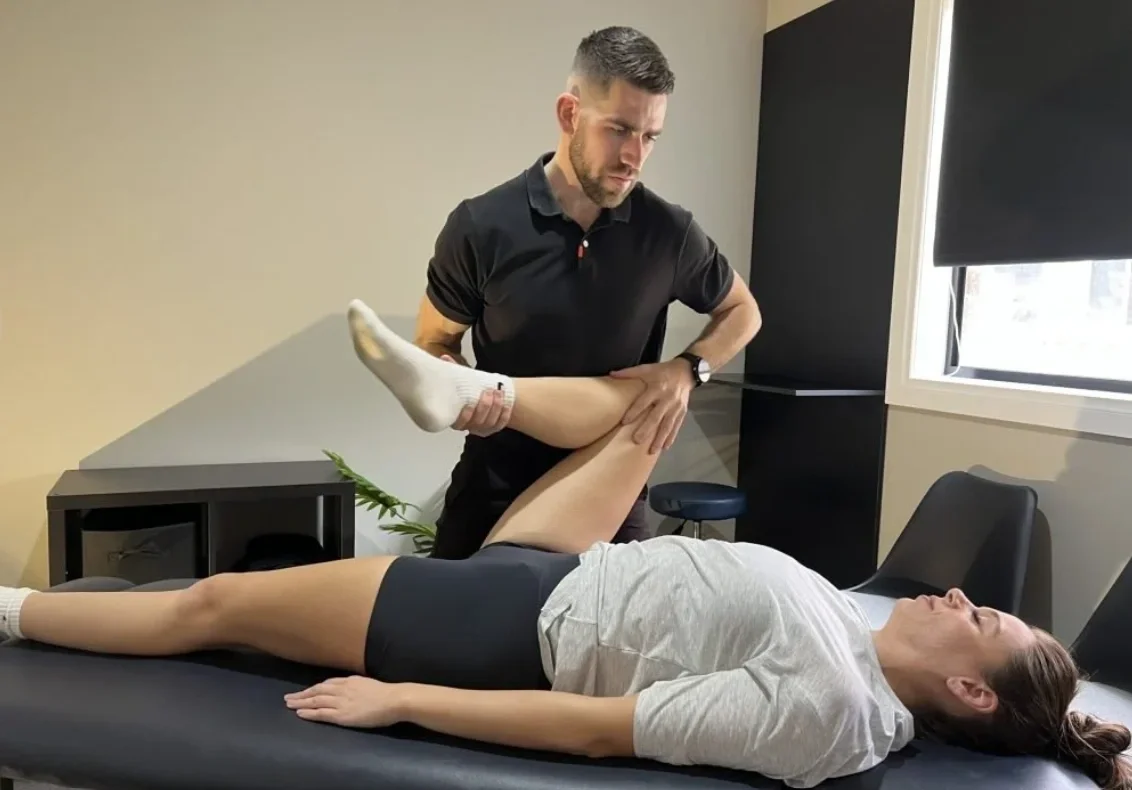
A rehabilitation assessment helps establish what your knee currently needs before deciding how to progress your exercises and activity.
Your practitioner may assess several areas.
Understanding Your Injury and History. Your practitioner may ask when your symptoms started, what caused them, and how they have changed. They may also ask about previous injuries, treatment, training, and activities that currently cause problems.
Assessing Movement and Mobility. Your knee and surrounding joints may be assessed for movement and mobility. This can help identify restrictions that may affect how you move during everyday activities or exercise.
Looking at Strength and Control. Strength is an important part of knee function. Your practitioner may assess how well you control movements such as squatting, stepping or other tasks relevant to your goals.
Identifying Contributing Factors. Knee symptoms do not always exist in isolation. Your assessment may consider factors such as movement patterns, physical capacity, training load, activity levels and recovery habits.
Understanding Work and Sport Demands. Your rehabilitation should prepare you for what you actually need to do. A footballer may need to run, jump and change direction. A tradesperson may need to kneel, climb, carry equipment or work in awkward positions.
Establishing Realistic Recovery Goals. Your goals help shape the rehabilitation process. You may want to walk comfortably, return to the gym, get back to running, return to community sport or resume competitive activity. The goal is to build a realistic pathway towards those activities.
What Does Knee Rehabilitation Involve?
Knee rehabilitation usually progresses through several stages rather than relying on one treatment or exercise.
1. Managing Symptoms and Movement Restrictions
Early rehabilitation may focus on managing symptoms and improving comfortable movement.
Where appropriate, hands-on treatment may form part of this stage. At Optimal State, osteopathy uses a hands-on structural approach for musculoskeletal and sports-related problems.
Hands-on treatment should have a clear purpose and support your ability to move and participate in the active parts of rehabilitation. You can also read more about how manual therapy and rehabilitation can work together.
2. Restoring Movement
Reduced knee movement can affect everyday activities and exercise.
Mobility work may help restore the movement you need for tasks such as walking, squatting and climbing stairs. The exact exercises will depend on your injury, symptoms and current physical capacity.
3. Rebuilding Strength
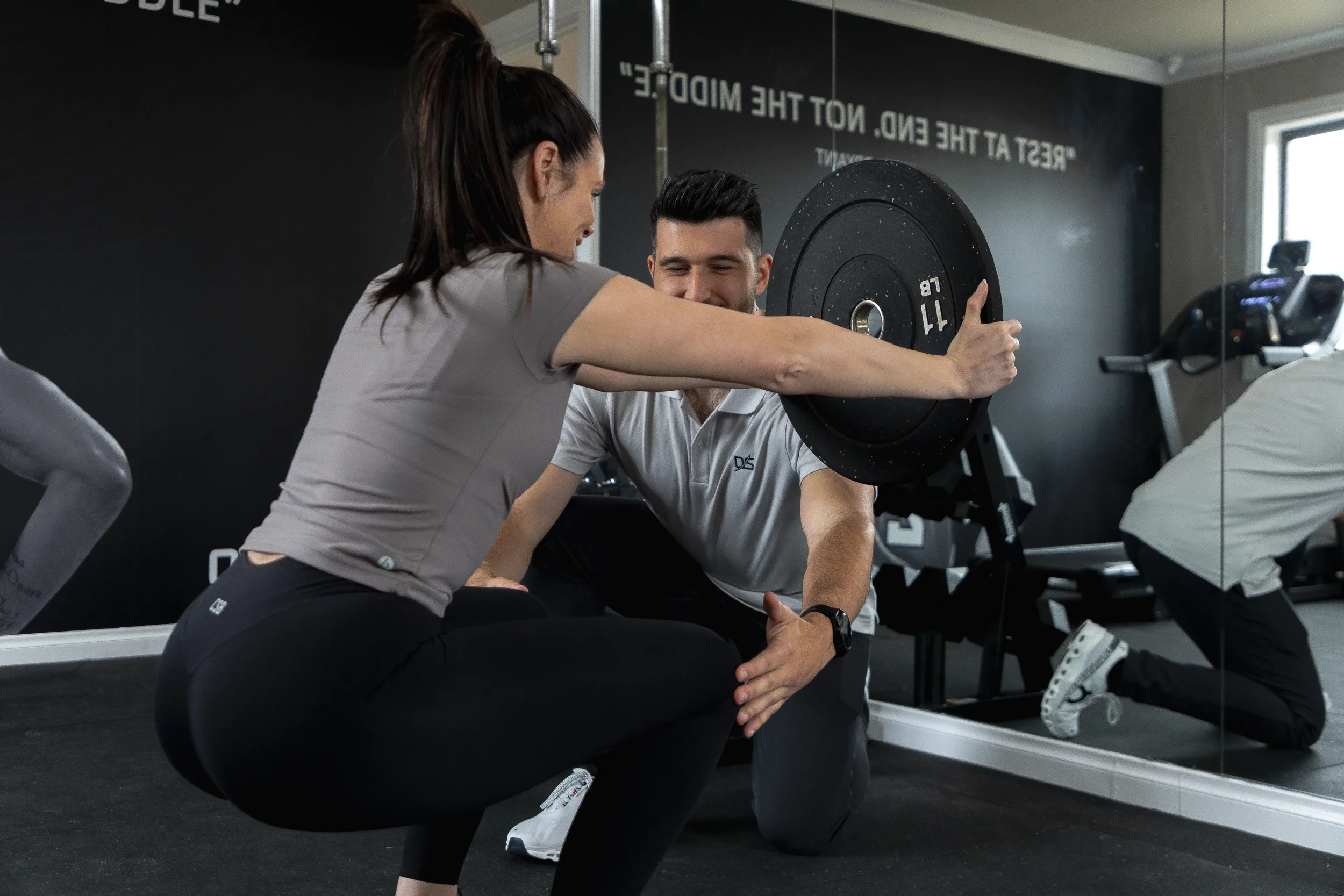
Strength is central to returning to activity. Your program may begin with simple exercises and gradually increase resistance, repetitions or complexity.
As your capacity improves, exercises can become more demanding.
This progressive approach is also relevant to people recovering from other musculoskeletal injuries. Our exercise rehabilitation service can be tailored around individual recovery and activity goals.
4. Improving Control and Function
Rehabilitation should eventually move beyond isolated exercises.
You may progress towards movements such as:
Squatting
Stepping
Lunging
Landing
Balancing
Running
Changing direction
These movements can help bridge the gap between basic rehabilitation and normal activity.
5. Returning to Activity
The final stage is not simply being pain-free.
Your knee needs to tolerate the demands of your chosen activity.
That might mean progressively returning to gym training, work, running or sport. A gradual increase in load can help you understand how your knee responds as activity becomes more demanding.
For people returning to sport, rehabilitation may eventually include sport-specific running, jumping and change-of-direction tasks. Our guide to returning to sport after injury covers some of the factors that can influence this progression.
How Long Does Knee Rehabilitation Take?
There is no universal recovery timeframe for a knee injury.
Recovery can be influenced by:
Type and severity of the injury
Current strength and mobility
Previous injuries
Age and general health
Training history
Consistency with rehabilitation
Work requirements
Sporting demands
Whether surgery was involved
A minor injury may require a different approach from a significant ligament injury or post-operative recovery.
Progress should therefore be based on your physical capacity, symptoms and ability to tolerate increasing demands rather than an arbitrary deadline.
When Can You Return to Sport or Exercise?
You can generally consider returning to sport when your knee can tolerate the physical demands of that activity, rather than simply when pain has disappeared.
Your rehabilitation may consider:
Symptoms during and after activity
Strength
Movement quality
Balance and control
Confidence
Load tolerance
Running and jumping capacity
Sport-specific movements
For example, being comfortable walking does not necessarily mean your knee is ready for repeated sprinting or rapid changes of direction.
Return-to-sport rehabilitation should gradually expose you to the demands you need to handle.

Why Rehabilitation Should Be Progressive
Your body needs time to adapt to increasing physical demands.
The goal is not simply to make your knee feel better. It is to gradually rebuild its ability to tolerate the activities you want to return to.
Think of rehabilitation as a bridge.
You may start with basic movement and controlled exercises. From there, you can progress towards heavier resistance, more complex movements and eventually your normal activity.
This approach can also make rehabilitation more relevant to your everyday life.
The process does not necessarily end when your symptoms improve. Maintaining appropriate strength, movement capacity and activity levels can form part of longer-term injury management.
For more information about maintaining support throughout recovery, see our article on continuity of care during rehabilitation.
When Should You Get Your Knee Assessed?
Not every minor ache requires professional assessment.
However, an assessment may be appropriate if you experience:
Persistent or recurring knee pain
Ongoing swelling
A feeling of instability
Locking or restricted movement
Significant weakness
Difficulty bearing weight
An injury that prevents normal activity
Symptoms that keep returning
Difficulty progressing your exercises
Significant trauma, suspected fracture or dislocation, severe symptoms or major loss of function should receive prompt medical assessment.
If you are unsure what is causing your symptoms, avoid trying to diagnose the injury yourself. An assessment can help establish what may be contributing to your symptoms and what the next step should be.
Knee Injury Rehabilitation in Burnside Heights
If you are looking for rehabilitation services in Burnside Heights, your rehabilitation should fit around your actual lifestyle.
That could mean returning to work after an injury, getting back to the gym or rebuilding your confidence before returning to sport.
Optimal State provides rehabilitation alongside chiropractic and osteopathy services from its Burnside Heights clinic. Our rehabilitation programs are designed around individual goals and can include personalised exercise rehabilitation, strength development and progressive recovery.
For people searching for sports injury rehabilitation in Burnside Heights, the focus can extend beyond symptom management. Rehabilitation can progressively rebuild the movement, strength and physical capacity needed for your chosen activity.
The same principle applies to musculoskeletal rehabilitation. Your symptoms, physical demands and goals should help shape the approach.
For local patients, Optimal State is located in Burnside Heights and serves surrounding western Melbourne suburbs, including Delahey, Caroline Springs, Fraser Rise, Deanside, Hillside and Taylors Lakes.
Frequently Asked Questions
-
Recovery time varies depending on the injury, severity, physical capacity and your goals. Surgical injuries and significant ligament injuries may require longer rehabilitation than less severe problems.
-
In many cases, appropriate exercise forms an important part of rehabilitation. However, exercises should match your current capacity. Your program can then progress as your strength, movement and tolerance improve.
-
Not necessarily. The appropriate level of care depends on the injury and your individual circumstances. Depending on your presentation, rehabilitation, osteopathy, chiropractic care or other healthcare may be considered. An assessment can help determine an appropriate starting point.
-
There is no single return-to-sport date for every knee injury. Your return should consider strength, movement quality, symptoms, confidence and your ability to tolerate the demands of your sport.
-
Rehabilitation can help rebuild strength, movement control and physical capacity. It can also help identify relevant limitations and gradually prepare you for the demands of your work, training or sport. This may help reduce the risk of problems when you return to activity.
Ready to Start Your Knee Rehabilitation?
A knee injury does not necessarily mean giving up the activities you enjoy.
The right rehabilitation program can provide a structured pathway from early recovery through to strength development and return to activity.
At Optimal State, rehabilitation is built around assessment, individual goals and progressive exercise. Hands-on treatment may also form part of care when appropriate.
If knee pain, weakness or reduced confidence is affecting your work, exercise or sport, consider booking an assessment to discuss your situation and determine the next appropriate step.