
How Manual Therapy Supports Sports Injury Treatment Near Caroline Springs
Whether your injury happened while playing weekend sport, exercising at the gym, lifting at work, or simply keeping up with an active lifestyle, recovering properly is about more than waiting for the pain to settle.
Manual therapy is one of the many treatment approaches used to support recovery from musculoskeletal injuries. When combined with exercise rehabilitation and a personalised management plan, it may help improve joint mobility, reduce muscle tension, restore movement, and support long-term recovery.
If you're interested in why this combination is often more effective than either approach alone, you can learn more about manual therapy and rehabilitation working together.
What Is Manual Therapy?
Manual therapy is a hands-on treatment used to improve joint mobility, reduce muscle tension, restore movement, and support recovery from musculoskeletal injuries.
The primary goal of manual therapy is to improve the way your joints, muscles, and soft tissues move so you can participate more comfortably in rehabilitation and return to your normal activities.
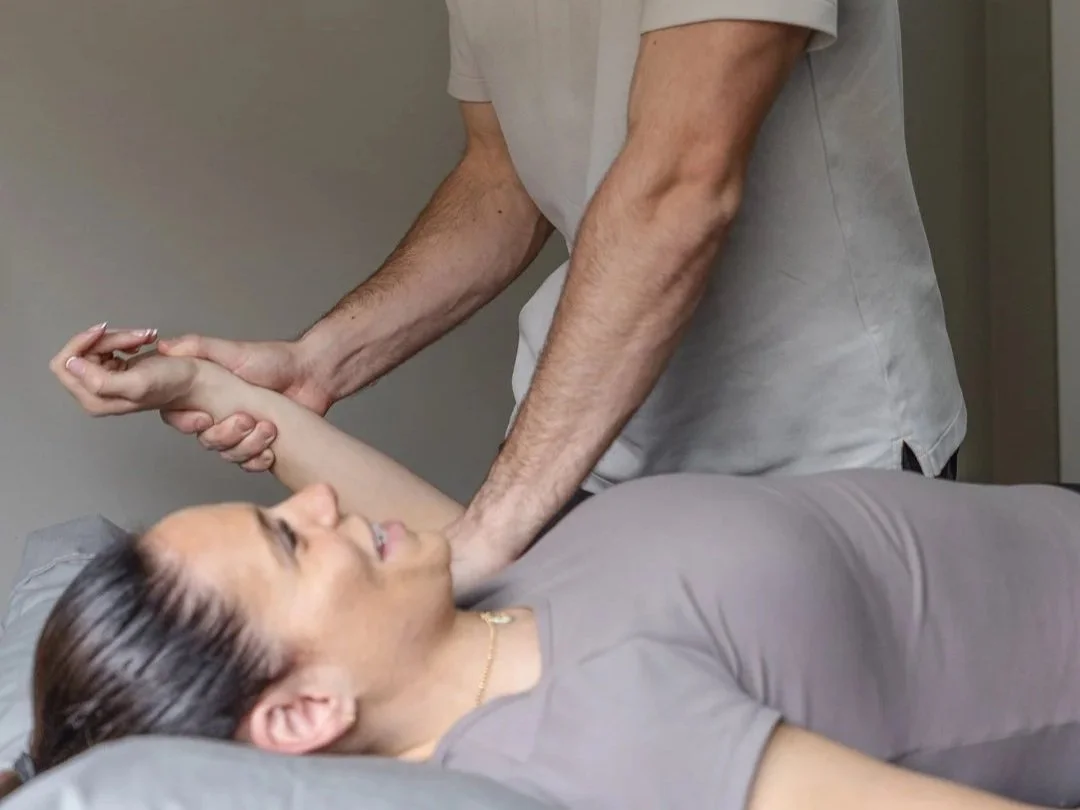
Depending on your assessment findings, treatment may include:
Joint mobilisation to improve restricted movement
Soft tissue therapy to reduce muscle tightness
Trigger point therapy
Myofascial release
Stretching and mobility techniques
Dry needling where clinically appropriate
Movement retraining and rehabilitation exercises
If you'd like to better understand how manual therapy supports recovery after physical activity, our guide on manual therapy for sports recovery explains how hands-on treatment complements movement-based rehabilitation.
How Manual Therapy Supports Recovery
Reducing Muscle Tension and Discomfort: Following an injury, surrounding muscles often tighten to protect the affected area. Manual therapy may help reduce muscular tension, improve comfort during movement, restore normal movement patterns, and prepare the body for rehabilitation exercises.
Improving Joint Mobility: After injury, reduced joint mobility may place additional stress on surrounding muscles and connective tissues. Restoring movement often makes exercise rehabilitation more effective and may help reduce compensation patterns elsewhere in the body.
Improving Soft Tissue Function: Soft tissue techniques may assist by improving tissue mobility, reducing muscle tightness, improving flexibility, supporting healthy movement, and preparing tissues for strengthening exercises
Common Sports Injuries Managed with Manual Therapy
1. Lower Back Injuries
Lower back pain is one of the most common reasons people seek assessment. Symptoms may include sciatica, disc bulges, lumbar muscle strains, joint irritation, stiffness after lifting, and pain when bending or twisting.
These problems aren't limited to athletes. They commonly affect tradespeople, warehouse workers, teachers, office workers, cleaners, and anyone performing repetitive lifting, prolonged standing, or extended periods of sitting.
Lower back pain and neck pain are among the most common musculoskeletal complaints we see. You can also explore how chiropractic care may help with lower back pain, neck pain, and sports injuries to better understand the importance of addressing movement restrictions early.
2. Neck Pain and Headaches
Neck pain is another condition frequently seen in adults with busy work and family lives. For many people, symptoms develop gradually rather than from a single injury.
Teachers may spend long periods standing, writing, and working on computers. Receptionists and office workers often spend hours looking at computer screens. These repeated movements and sustained postures may contribute to neck stiffness, headaches, and reduced mobility over time.
3. Ankle Sprains
Ankle injuries are common in running, football, basketball, and other sports. Even after swelling improves, some people experience ongoing stiffness or reduced stability.
Effective ankle sprain rehabilitation often combines manual therapy with balance training and strengthening exercises.
4. Knee Injuries
Knee pain may develop from sudden injuries or repetitive stress.
Common problems include:
Patellofemoral pain
Tendon irritation
Ligament sprains
Running-related knee pain
Manual therapy may improve surrounding joint and muscle function, helping make rehabilitation more effective.
5. Shoulder Injuries
Sports involving throwing or overhead movements can place significant stress on the shoulder. Treatment may assist with conditions such as:
Rotator cuff irritation
Shoulder stiffness
Muscle strains
Shoulder impingement
Why Manual Therapy Should Be Combined With Rehabilitation
Although manual therapy can play an important role in recovery, it is generally most effective when combined with active rehabilitation.
Hands-on treatment may help improve movement and reduce muscle tension, but long-term improvements are achieved by restoring strength, mobility, balance, and movement control.
A personalised rehabilitation program may include:
Progressive strengthening exercises
Mobility and flexibility training
Balance and coordination exercises
Functional movement retraining
Load management strategies
Home exercise programs
Advice on returning to normal activities safely
By combining manual therapy with exercise rehabilitation, treatment addresses both current symptoms and the underlying factors contributing to the injury.
This approach aims to support lasting improvements rather than short-term relief alone. For more information about why active rehabilitation plays such an important role in recovery, read our article on advanced sports injury rehabilitation and how progressive exercise supports long-term movement and function.
What Our Patients Say
Recovering from an injury looks different for everyone. Many people seek care because pain is limiting their work, exercise, or everyday activities, while others want to move more confidently and reduce the risk of recurring problems.
Here's what some of our patients have shared about their experience at Optimal State:
"Optimal State has not only resolved my injury but has helped me in every aspect of my training and health to ensure my body is 100% week in week out. Highly recommended."— Dakota Borg
"I visited Optimal State to fix some lower back pain that had been bothering me and was fortunate to have Dr Stefan De Pietro take care of me. I appreciate the time he took with me to assess the injury and how clear he was with what needed to be done. I can safely say this is the best it's felt in a long time and I will be back again."— Joshua Biddick
These experiences highlight the importance of combining a thorough assessment with a personalised treatment plan that addresses both symptoms and the factors contributing to them.
Frequently Asked Questions
-
Manual therapy can be an effective part of a comprehensive rehabilitation program for many musculoskeletal injuries. It may help improve joint mobility, reduce muscle tension, restore movement, and make it easier to participate in strengthening and rehabilitation exercises.
For long-term recovery, manual therapy is typically combined with exercise rehabilitation, movement education, and gradual progression back to normal activities.
-
Many people experiencing lower back pain or sciatica have a combination of joint stiffness, muscle tightness, reduced mobility, and changes in movement patterns.
Manual therapy may help improve movement and reduce muscular tension, while rehabilitation exercises aim to improve strength, flexibility, and long-term function. Treatment is always guided by an individual assessment.
-
Yes. Manual therapy is commonly used as part of the management of neck pain, cervicogenic headaches, muscle strains, and postural neck discomfort.
Many people who spend long hours working at a computer, teaching, driving, or performing repetitive tasks develop neck stiffness and muscle tension over time. Improving joint mobility and restoring normal movement may help reduce these symptoms when combined with appropriate rehabilitation.
-
Most manual therapy techniques are gentle and adjusted to suit your comfort level.
Some people may experience mild tenderness during or shortly after treatment, particularly if muscles have been tight or irritated for some time. This is usually temporary, and your practitioner will modify treatment based on your response.
-
Recovery varies from person to person.
The number of sessions depends on several factors, including:
The type of injury
How long symptoms have been present
The severity of the condition
Your work and lifestyle demands
Your rehabilitation goals
How consistently rehabilitation exercises are completed
Your progress should be reviewed regularly so your management plan can be adjusted as your movement and function improve.
-
Manual therapy may help improve movement and address restrictions that contribute to pain. However, reducing the risk of future injuries also depends on maintaining strength, mobility, good movement habits, and appropriate recovery between physical activities.
A personalised rehabilitation program can help improve your body's ability to tolerate everyday movement, work demands, exercise, and recreational sport.
-
It's worth seeking professional advice if:
Pain persists for more than a few days
Symptoms continue to return
Movement becomes restricted
You experience weakness or instability
Pain interferes with work, exercise, or daily activities
You're unsure how to safely return to activity
Early assessment may help identify contributing factors and support a more effective recovery.
Recover Stronger with Personalised Care
If pain is stopping you from enjoying sport, exercising, working comfortably, or simply moving with confidence, seeking the right care early can make a meaningful difference to your recovery.
At Optimal State, we take the time to understand why your injury developed, not just where it hurts. Our experienced team uses a direct, structural approach, combining manual therapy with personalised rehabilitation programs to help improve movement, restore function, and support long-term recovery.
Whether you're experiencing lower back pain, sciatica, neck pain, headaches, postural strain, or another musculoskeletal injury, we're here to help you move better and get back to doing the things you enjoy. If you'd like to learn more about how hands-on care and active rehabilitation work together, our guide to osteopathy for sports injuries and active rehabilitation provides additional insights into supporting recovery.
Conveniently located in Burnside Heights, we proudly care for patients from Caroline Springs, Burnside, Deer Park, Taylors Hill, Hillside, St Albans, and surrounding suburbs.
If you're looking for sports injury treatment near Caroline Springs, book an appointment with the team at Optimal State today. We'll work with you to identify the cause of your symptoms, create a personalised treatment plan, and help you recover with confidence.