
Shoulder rehabilitation after an injury is about more than waiting for pain to settle. A shoulder can become painful, stiff or weaker after an injury, and you may change how you move to protect it. Over time, this can affect everyday activities, work, exercise and sport.
Shoulder rehabilitation is a structured process that aims to restore movement, strength, load tolerance and function after an injury or period of reduced activity. The right approach depends on the type of injury, your symptoms, current physical capacity and the activities you want to return to.
A good rehabilitation program is not simply a list of exercises. It should consider how your shoulder is moving, what activities you need to perform and how your symptoms respond as you gradually increase activity.
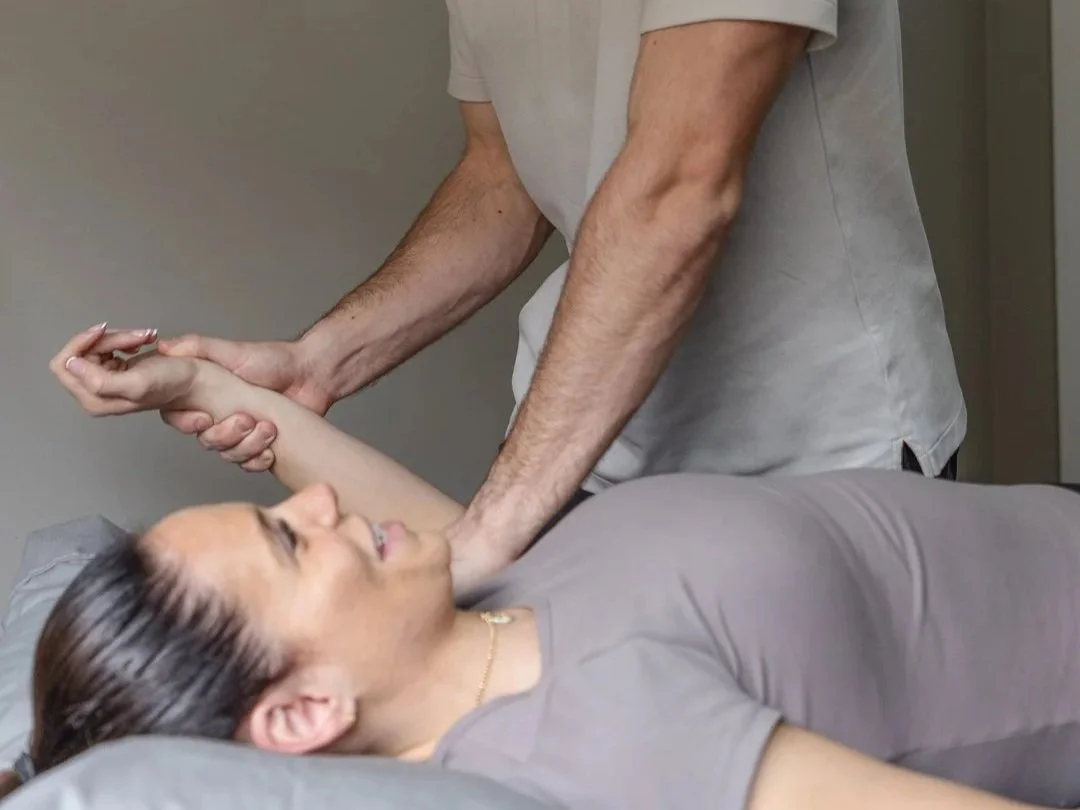
What Happens to the Shoulder After an Injury?
A shoulder injury can affect several aspects of physical function.
Pain may make certain movements uncomfortable. You may avoid reaching overhead, lifting objects or sleeping on the affected side. Reduced movement can also develop because of pain, stiffness or protective movement patterns.
Strength can decrease when you use the shoulder less. This does not necessarily mean the muscle itself has been damaged. Reduced activity can simply lead to reduced capacity.
You may also start moving differently without realising it. For example, you might use your neck or upper back more when reaching or keep your arm closer to your body while lifting.
An injury can also affect confidence. If a particular movement previously caused pain, it is understandable to feel cautious about doing it again. Rehabilitation can help rebuild physical capacity and confidence through gradual exposure to activity.
What Are the Goals of Shoulder Rehabilitation?
Shoulder rehabilitation usually has several goals rather than one single target.
1. Manage Symptoms and Irritability
Early rehabilitation may focus on helping the shoulder tolerate movement and activity.
This does not necessarily mean avoiding all movement. Instead, activity can be adjusted to a level the shoulder can currently manage.
The appropriate approach depends on the injury, symptoms and individual circumstances.
2. Restore Shoulder Mobility
Shoulder movement can become restricted after an injury.
Rehabilitation may include appropriate mobility exercises to gradually improve movement. The type and amount of mobility work should match your presentation.
More movement is not always better. The aim is to restore useful movement without repeatedly aggravating the shoulder.
3. Rebuild Strength
Strength is an important part of shoulder injury rehabilitation.
Progressive resistance exercises can improve the shoulder's ability to tolerate physical demands. Exercise selection and resistance can change as your capacity improves.
The goal is not simply to make one muscle stronger. It is to build enough capacity for the activities that matter to you.
4. Improve Movement and Control
Shoulder function involves more than muscle strength.
The shoulder, shoulder blade, upper back and arm work together during many movements. Rehabilitation can include exercises that challenge coordination, control and movement under load.
This becomes particularly relevant when returning to lifting, repetitive work, gym training or sport.
5. Restore Functional Capacity
Ultimately, rehabilitation should help you return to useful activities.
That might mean reaching into a cupboard, carrying groceries or returning to work. For someone who trains regularly, it may mean rebuilding tolerance for pressing, pulling or overhead movements.
The final goal should relate to what you actually need to do.
What Does Shoulder Rehabilitation Involve?
There is no single exercise routine that suits every shoulder injury. A rehabilitation program should be based on an appropriate assessment and adjusted according to how your shoulder responds.
1. Assessment
Rehabilitation starts with understanding the problem. A practitioner may assess:
Which movements cause symptoms?
How much movement is available?
How does the shoulder respond to resistance?
Which activities are difficult?
What are your work, exercise or sporting demands?
How have your symptoms changed over time?
The answers help guide the rehabilitation plan. Assessment can also help identify situations where further medical assessment may be appropriate.
2. Restoring Movement
Mobility exercises may form part of rehabilitation when movement is restricted.
These can include controlled shoulder movements, stretching or other exercises selected according to your presentation.
The aim is gradual improvement. Exercises should be appropriate for your current level of irritability rather than chosen simply because they are popular online.
3. Strengthening
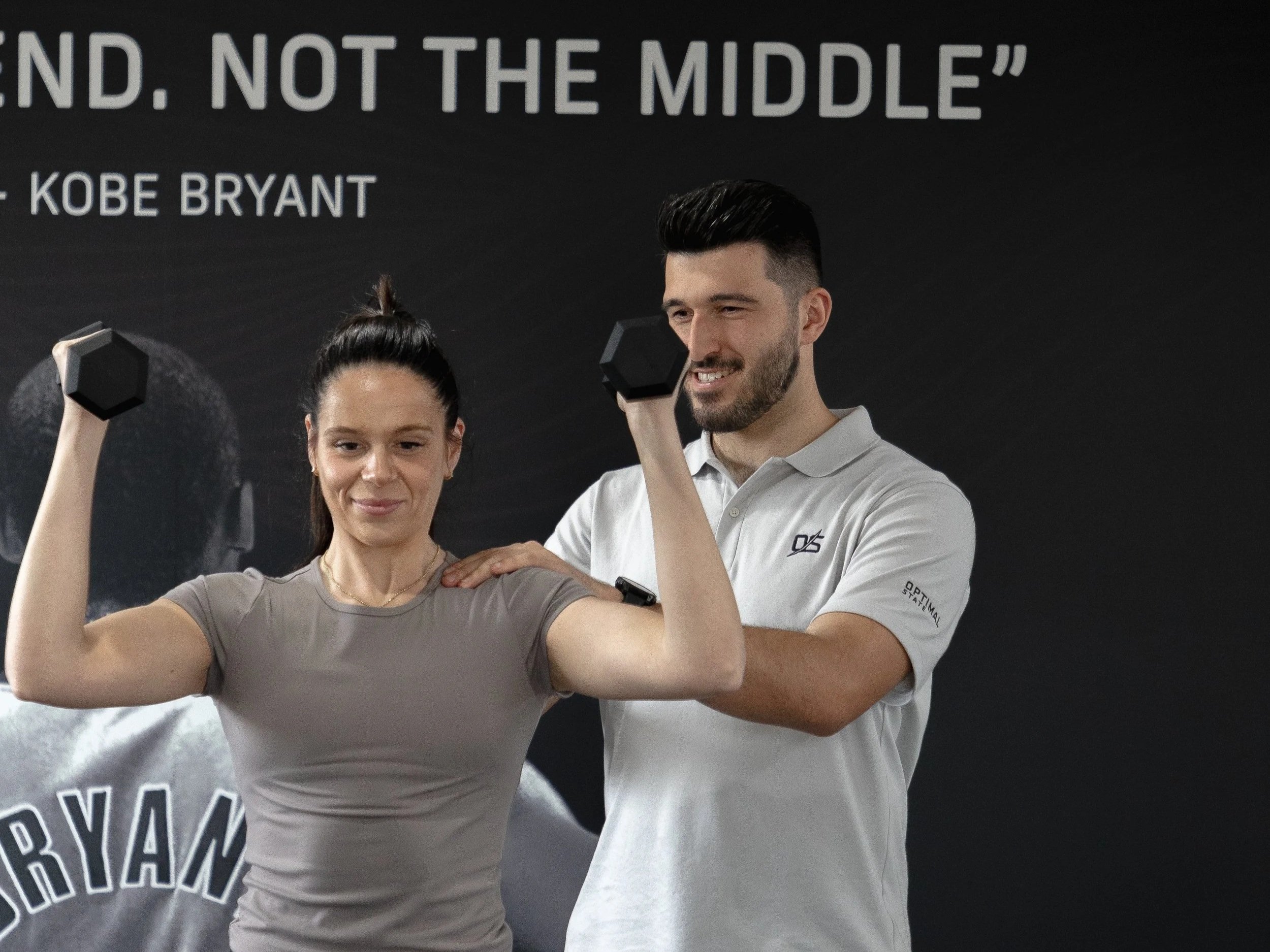
Once the shoulder can tolerate it, strengthening becomes an important part of rehabilitation.
Exercises may involve the shoulder muscles, shoulder blade, upper arm and surrounding areas.
Resistance can be progressed over time by changing factors such as:
Repetitions
Resistance
Range of movement
Exercise complexity
Training volume
The specific progression depends on your current capacity and rehabilitation goals.
If your recovery involves broader movement or strength limitations, our approach to exercise rehabilitation after injury provides further information about how rehabilitation can progress beyond a single injured area.
4. Functional Training
Rehabilitation should eventually move beyond isolated exercises.
You may need to practise movements that resemble your everyday activities, including:
Reaching
Lifting
Carrying
Pushing
Pulling
Working overhead
Supporting body weight through the arm
Functional exercises help bridge the gap between rehabilitation exercises and real-world activity.
5. Activity-Specific Loading
The later stages of rehabilitation should reflect your goals.
Someone returning to office work may have different requirements from someone working in construction. A recreational gym-goer may have different demands from a swimmer, tennis player or contact-sport athlete.
This is why an injury rehabilitation program should be tailored to the activity you want to return to.
Can Hands-On Treatment Be Part of Shoulder Rehabilitation?
Yes. Hands-on treatment can be one component of a broader rehabilitation plan when it is appropriate for the individual.
A chiropractor or other qualified practitioner may use manual techniques to address relevant movement restrictions or surrounding tissues.
However, hands-on treatment should not replace active rehabilitation. Exercise and progressive loading remain important for building physical capacity.
The combination of hands-on treatment and active rehabilitation can be useful when each component has a clear role within the overall plan. You can read more about manual therapy and rehabilitation and how the two approaches can work together.
At Optimal State, treatment is based on assessment rather than a standard routine. The role of hands-on treatment can vary depending on your symptoms, movement, goals and response to treatment.
How Do You Know Your Shoulder Is Ready for Normal Activity?
There is no single test that determines whether every shoulder is ready for normal activity. Instead, several factors can be considered.
Movement: Can you move the shoulder through the movements required for your activity?
Strength: Can the shoulder produce and tolerate the force needed for the task?
Tolerance: Can you perform the activity without a significant or ongoing increase in symptoms?
Functional Tasks: Can you complete movements that resemble your normal work, exercise or daily activities?
Symptom Response: How does your shoulder respond during and after activity? A shoulder that feels fine during exercise but becomes significantly more symptomatic afterwards may need a different progression.
Activity-Specific Demands: Returning to normal daily activities is different from returning to heavy lifting or competitive sport. Your rehabilitation should reflect those demands.

Shoulder Rehabilitation Near Caroline Springs and Surrounding Areas
If you are looking for shoulder rehabilitation near Caroline Springs, the right approach should consider more than the location of the clinic.
Your rehabilitation may need to account for the demands of your work, daily activities, gym training or sport. Someone working in a physically demanding role may need to rebuild tolerance for repeated lifting and carrying, while someone with a desk-based role may have different movement and activity requirements.
Optimal State provides chiropractic and rehabilitation care from Burnside Heights for people in Caroline Springs and surrounding western Melbourne suburbs.
If you are experiencing shoulder pain around Taylors Lakes, you may also find our guide to shoulder pain treatment near Taylors Lakes useful.
The focus should ultimately be on understanding the problem, managing symptoms appropriately and progressively rebuilding the capacity needed for normal activity.
Optimal State's Approach to Shoulder Rehabilitation
At Optimal State, we don't use a one-size-fits-all rehabilitation protocol.
We assess how the shoulder is moving and functioning, identify relevant contributing factors and build treatment and rehabilitation around your goals.
Depending on the individual, care may include chiropractic treatment, exercise rehabilitation, education and progressive loading.
Our rehabilitation service is designed to help people progressively build the capacity needed for everyday life, work, exercise and sport.
This approach can also involve coordination between different areas of care where appropriate. Our integrated allied health approach explains how different forms of care can work together around the needs of the individual.
The focus is on helping you understand your shoulder and progressively build the capacity needed to return to the activities that matter to you.
Frequently Asked Questions
-
Rehabilitation can help improve strength, movement and tolerance for activity. These factors can support a gradual and appropriate return to physical demands.
However, no rehabilitation program can guarantee that an injury will never happen again. Previous injury, activity, training load and other factors can influence future symptoms.
-
It depends on the cause, severity and behaviour of your symptoms.
Some shoulder problems can be managed with appropriately modified exercise. Other situations may require a different approach or further assessment.
Rather than choosing exercises based only on pain, it is useful to consider how the shoulder responds during and after activity. If you are unsure, seek an assessment from an appropriately qualified health professional.
-
Shoulder rehabilitation exercises vary according to the injury, symptoms, current capacity and goals.
A program may include mobility exercises, resistance training, movement-control exercises and functional activities. Exercises and resistance should generally be progressed as your capacity improves.
-
There is no single frequency that suits everyone.
Your rehabilitation schedule depends on the exercises, your current capacity and how your shoulder responds. Some exercises may be prescribed frequently, while others may require more recovery time.
Consistency matters, but so does appropriate progression.
-
Returning to the gym should usually be gradual.
You may be able to train some areas while modifying exercises that place greater demands on the shoulder. As your movement, strength and tolerance improve, exercises and loads can be progressively reintroduced.
The right progression depends on your injury and the type of training you want to resume.
-
A chiropractor may be able to contribute to shoulder rehabilitation depending on the individual's presentation.
Care may include assessment, appropriate hands-on treatment, exercise rehabilitation, education and progressive loading. The specific approach should be based on the person's symptoms, goals and response to treatment.
-
Yes. Manual treatment can be used alongside active rehabilitation when it is considered appropriate. It may help address certain movement restrictions or provide short-term symptom relief for some people.
However, it should generally form part of a broader plan rather than replace progressive exercise and activity.